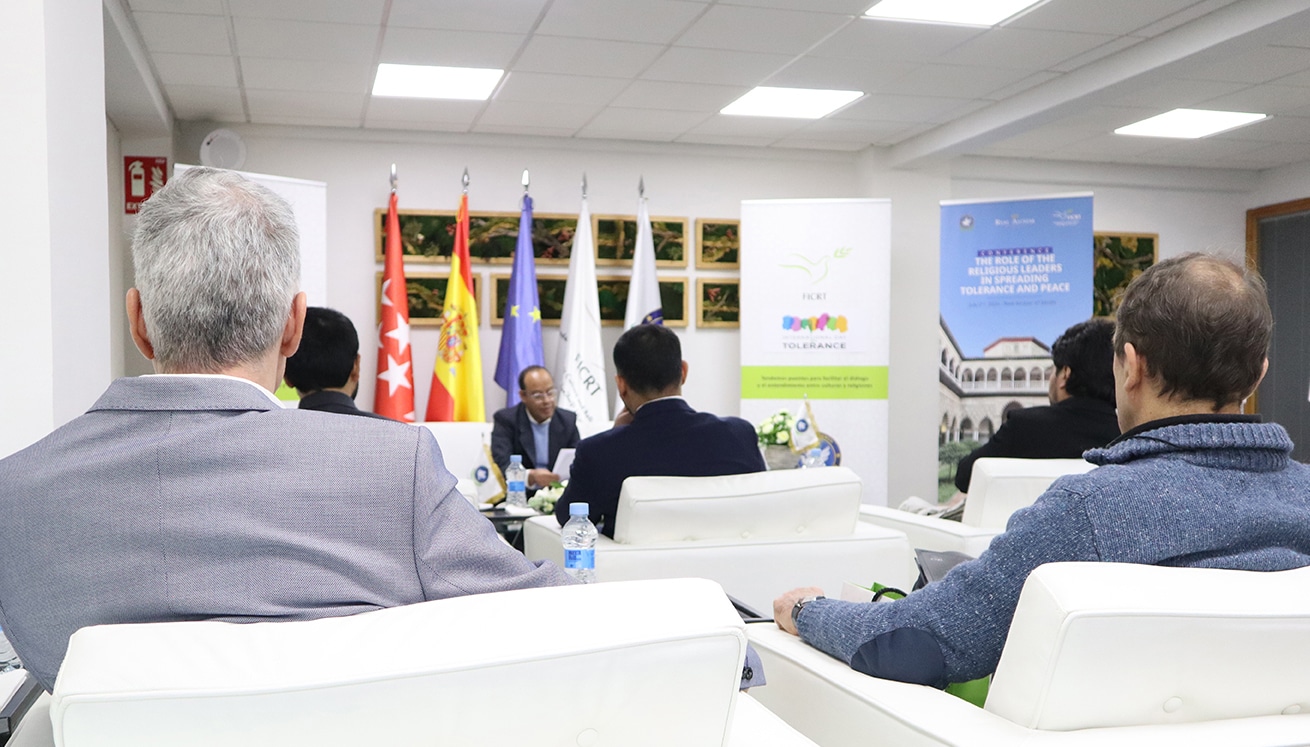
As part of its ongoing efforts to promote interfaith and intercultural understanding, the Foundation for Culture and Religious Tolerance (FCTR) organised an intellectual lecture by Dr. Saif Al-Islam Benabdennour entitled: ‘Tolerance and Dialogue in Our Time,’ attended by a select group of academics, intellectuals, and those interested in issues of dialogue and coexistence.
This lecture is part of the initiatives launched by the Foundation since its establishment in Madrid, with the aim of consolidating the values of tolerance and coexistence between cultures and religions at the global level. The Foundation organises a number of cultural and awareness programmes, including the ‘Tolerance Programme for Cultural Exchange’, which includes scientific and cultural visits to universities, exhibitions and research centres in Spain, and provides opportunities for cultural exchange between Emirati and Spanish youth. These initiatives complement a wide range of educational and diplomatic activities aimed at promoting the values of global openness. It was in this context that this meeting sought to shed light on the current state of the world and ways to overcome the problems facing societies today.
Diagnosis of the crisis of our time: the fall of the illusion of inevitable progress
Dr. Saif Al-Islam Benabdennour began his lecture with a critical analysis of the idea of ‘linear progress’ associated with the Age of Enlightenment, emphasising that the events of the 20th and 21st centuries, from wars to crises and the polarisation experienced by many societies, have revealed the fragility of the belief that humanity is inevitably moving towards a better future, and that every future period will inevitably be better than the previous one.
He pointed out that the climate crisis, widening social disparities, and renewed identity conflicts are all signs that progress is fragile and reversible, recalling the ideas of philosophers such as Walter Benjamin, Hannah Arendt, and Michel Foucault, who exposed the contradictions of the modernist project.
Between optimism and pessimism: towards a realistic view of progress
He explained that progress does not happen automatically, but requires constant vigilance, moral commitment and decisive decisions, recalling that in the last two decades, the world has been disappointed in the ability of international institutions to maintain peace across the globe.
Manifestations of global tension between 2020 and 2025
Dr. Benabdennour reviewed the most prominent features of the global scene and the problems experienced by societies on the five continents, leading to waves of displacement resulting from climatic and human crises.
Tolerance and dialogue: from passive abstention to genuine recognition
Dr. Benabdennour stressed the need to move from the concept of tolerance as passive acquiescence to active tolerance based on social justice and mutual recognition. Tolerance from a position of power, he said, can turn into ‘charity from above,’ while genuine dialogue is based on equality and respect.
He also invoked Gadamer’s hermeneutic philosophy to emphasise that dialogue, before being a discussion, is a process of listening and encounter between cognitive horizons seeking understanding rather than victory.
For his part, Dr. Musabeh Saeed Alketbi, Deputy Chairman of the Board of Trustees and Director General of the Fundation For Culture and Religious Tolerance in Madrid, affirmed that the Foundation is moving forward with its programmes, activities and approach, which was established to spread the values of tolerance, peace and dialogue among peoples in general and religions and laws in particular. To this end, the Foundation is adopting a variety of means through which it hopes to convey these noble values, including organising conferences and events that bring together religious leaders and open the doors to dialogue and discussion among them. The reason for this is that religious leaders have a significant influence on their communities and followers. It also works through intellectuals and academics, who have their own followers and students and many channels through which to convey these values to them. Among them is our speaker today, Dr. Saif al-Islam, who is an intellectual and well-known academic in cultural circles for many years and has always been an advocate of dialogue. Another means is education, which is why this door has been opened to spread the values of tolerance and dialogue among students and scholars, so that they in turn can convey them to their wider communities.
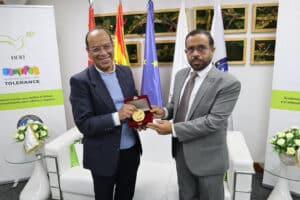
Since joining the Global Council for Tolerance and Peace (GCTP) in 2023, the Foundation has sought to work more broadly at the regional and international levels in the areas of tolerance, peace and interfaith dialogue. This cooperation has enhanced its effectiveness and contributed to strengthening its position as a key player in spreading the values of tolerance and understanding at the local and international levels.
The lecture concluded with extensive discussions that continued after the session, reflecting the audience’s interest in issues of identity, tolerance and dialogue, and highlighting the renewed need for a rational and humane vision that rebuilds confidence in the future.